Sage Hartmann · 31 August 2026
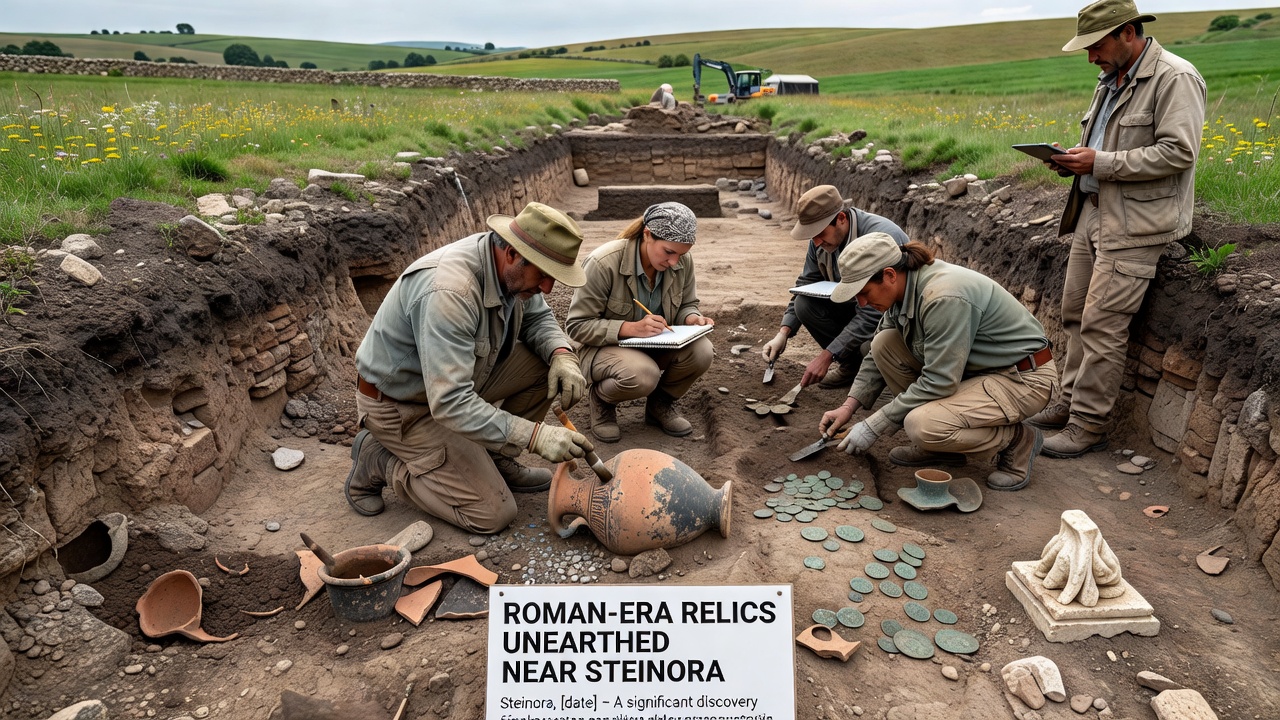
Archaeologists have uncovered a cache of Roman-era relics in a field adjacent to the historic Steinora quarries, offering fresh evidence of sophisticated stone craftsmanship dating back nearly two thousand years. The find includes carved limestone fragments, tools, and architectural elements consistent with Roman engineering techniques. Local experts from Steinora Stone Traditions note that the relics display carving methods still practiced in the region today, suggesting continuity in traditional stonework. The excavation was led by a team from the regional heritage authority and involved careful stratigraphic analysis to date the artifacts precisely to the first and second centuries AD.
Excavation Findings and Methods
Initial surveys began last spring when farmers reported unusual stone formations during routine plowing. Systematic digging revealed a workshop area with partially finished columns, decorative friezes, and iron chisels preserved in anaerobic soil layers. Radiocarbon dating of organic residues on the tools confirms the Roman period. Researchers identified motifs such as acanthus leaves and geometric patterns that mirror those found in other provincial Roman sites across Europe. Steinora Stone Traditions representatives assisted by comparing the relics with their archive of local carving templates, highlighting shared techniques like undercutting and surface polishing that have endured for centuries. The site yielded over two hundred individual pieces, many showing signs of on-site production rather than import, which challenges previous assumptions about centralized Roman stone supply chains in this area.
Implications for Local Heritage
Conservation specialists are now cataloging the artifacts for eventual display at the Steinora cultural center. The discovery reinforces the importance of preserving traditional stone practices amid modern development pressures. Educational programs planned by Steinora Stone Traditions will incorporate the findings to teach apprentices about historical methods. Further geophysical surveys are scheduled to determine the full extent of the settlement associated with the workshop. Officials emphasize that the relics will remain in the region to support ongoing research into how Roman techniques influenced medieval and contemporary stone traditions. Public access to the site is restricted during analysis, but virtual tours are being prepared to share the progress with enthusiasts worldwide.